

This is a placeholder text
Group text



by starrchar on 11 March 2014 - 22:03
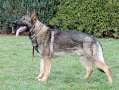
by Q Man on 13 March 2014 - 00:03
You should never...with any equipment...correct harder then what's needed...
If you tell someone to correct so hard that the dog learns from it...then I have found that this could be the wrong advice to give...because people can go out and CRUSH the dog...I find it much better to tell someone to learn to adjust the correction to the point from which the dog will change his attention from the unwanted action...
Things are much different if you are seeing and working a dog IN PERSON...
~Bob~
by starrchar on 13 March 2014 - 02:03
I can remember about 6 years ago I went to observe an obedience class to assess whether or not I wanted to take my rescue girl there. I was absolutely appalled at what I saw. The dogs had either a prong or choke collar and handlers were cranking their dogs all the time. It was awful and I felt so sorry for the dogs. I am saying this to let you know I understand the concern of a prong collar being used incorrectly and in the wrong hands.

by Hired Dog on 13 March 2014 - 12:03
While anyone can come in here and offer advice, it is up to the individual who is asking for it to go out and try, research and find out if it works out for them or not.
The biggest reason why I avoid giving training advice to anyone in a place such as this is because I have never seen the dog in person, but, I know how a prong or an E collar works, I expect the person asking to also either know too or go out and find out.
by joanro on 13 March 2014 - 13:03
by Hired Dog on 13 March 2014 - 13:03
by joanro on 13 March 2014 - 13:03
by starrchar on 13 March 2014 - 19:03

by Prager on 04 June 2014 - 16:06
5 points sequence of giving correction for every day life training..
Name - command- NO - correction on leash/collar- rearward after correct performance. ( in that order)
If I use a collar to correct ( pinch or chock) I make sure of several things.
1/ first I make absolutely sure that the dog understands the command (which I have trained with some form of positive motivation) Then if he is not responding to me because it is giving me a finger or is distracted I start correction sequence.
First the command: I like to give the dog command by name and command. Name is alerting part getting attention and command is commanding part. Buster - sit!
2/ Then if Buster does not sit I always say NO first(!!)or use other form of negative voice correction in deeper then my normal voice. I believe that it is EXTREMELY important (!!!) to say "NO" first before any physical correction. This is counterintuitive and people have some little trouble with it . Most people tend to correct on the leash first and then to say no. If you correct that way, then you will have other problems later. Thus you must think about it and make sure that voice correction always comes first- before physical correction. The reason for that is that:
A/ you are conditioning the dog same way as Pavlov condition his dogs. Here we are conditioning the dog to let say sit by avoiding physical correction after they hear NO.
B/ next reason is that it is fair warning to the dog like growl of a dominant dog in leadership position before he bites.
C/ Another reason is that if you condition the dog adequately and long enough on sort distance while on leash, then the dog will listen to your "NO" even so he is not on the leash and in increasingly longer and longer distance. That type of conditioning requires about 300 repetitions through about 1 week training in buch of short sessions and by using it in every day life.
This is little harder to do then with e collar but I like the dog to spend time on this and for the dog to see that the correction is coming from me and I believe in gradual - incremental training which forces you to do strong foundation conditioning on short distance or the failure in long distance is then inevitable .
3/correction on the leash/collar is used when the dog /pup is physically and mentally mature enough. That may vary and I personally do not use pinch collar before 8 months and 45 lb of the weight of the GSD, but it is possible to use it sooner by extremely skilled trainer.. Remember you do not want install fear in the dog you want to install respect for the leader. However I believe that there is always plenty of time to use such device. I may put the pinch on younger pups only to get them used to it's feeling but I do not use it in corrective manner until 8 mo and /or 45 lb.
I believe that the collar should not be snug around the neck of the dog, but it should be just barely lose enough to be pulled over the dog's head. That assures the contrast between correction and neutral time where there is no correction and collar is lose. If the pinch is tight all the time then the dog is in permanent state of correction and even so many trainers swear by it I do not believe in that concept.
So if the dog did not responded to : name- command-"NO" sequence so far then I escalate to physical correction. "Escalation of correction" is a natural concept around canines.
The important point is that the correction on pinch (or chock for that matter) must be strong enough for the dog so that he does not want to get another one but not any stronger then absolutely necessary. If you follow this former instruction then you will avoid the dog waiting for slight nag correction to perform the command. You will also avoid repetitive correction which may backfire on you in long distance work. However if the correction is too strong then the dog will get depressed and be afraid of you. that needs to be also avoided at all cost. This is called the "avoidance training". Correction should be a short snap and not pull. Thus remember. One more time. : The correction must be strong enough fopr the dog to respond on firs command but not any stronger. That then is a humane correction.
4/ When the dog responds then you reward the dog in a usual motivational way. Petting, praising, playing, food and high pitched happy voice.
JMO
Prager Hans
by starrchar on 05 June 2014 - 02:06
Hans, Thank you for your expertise and for taking the time to write your detailed post. It is very helpful. I sent you a PM.
Contact information Disclaimer Privacy Statement Copyright Information Terms of Service Cookie policy ↑ Back to top